
By the H.B.S. Rent a Car team · Published · Updated
Sri Lanka is a popular and generally welcoming destination, but conditions change: weather, protests, fuel supplies and health notices can affect a trip. Official governments publish travel advice that is updated far more often than any guide. This page does not replace those pages; it explains how to use them and what to think about when you drive.
Where to find current official advice
Check the travel advice pages of your own government's foreign ministry before you book and again shortly before you leave, for example the UK Foreign, Commonwealth and Development Office, Australia's Smartraveller, the German Federal Foreign Office or the US State Department. Also check the Sri Lanka Tourism Development Authority and the Department of Meteorology for local conditions. Register your trip with your embassy if the service exists.
Weather and seasons
Sri Lanka has two monsoon seasons that bring rain at different times to different coasts. In general the south-west monsoon (about May to September) is wet on the west and south coasts and in the hills, and the north-east monsoon (about October to January) is wet in the east and north. Inter-monsoon periods bring afternoon thunderstorms. Heavy rain can cause floods and landslides on hill roads.
| Months | Usually better | Usually wetter |
|---|---|---|
| December - March | West and south coasts, hill country, Cultural Triangle | East coast can still see rain in December and January |
| April - May | Hill country (warm, with showers) | Afternoon storms across the island |
| May - September | East coast, north, Yala, Cultural Triangle | West and south coasts, hill country |
| October - November | Mixed | Inter-monsoon storms; heavier rain in the east from late in the season |
Driving in rain and hills
- Slow down. Roads in the hills can be slick with mud and leaves.
- Watch for fallen rocks and soil after heavy rain, and turn back if a road is flooded.
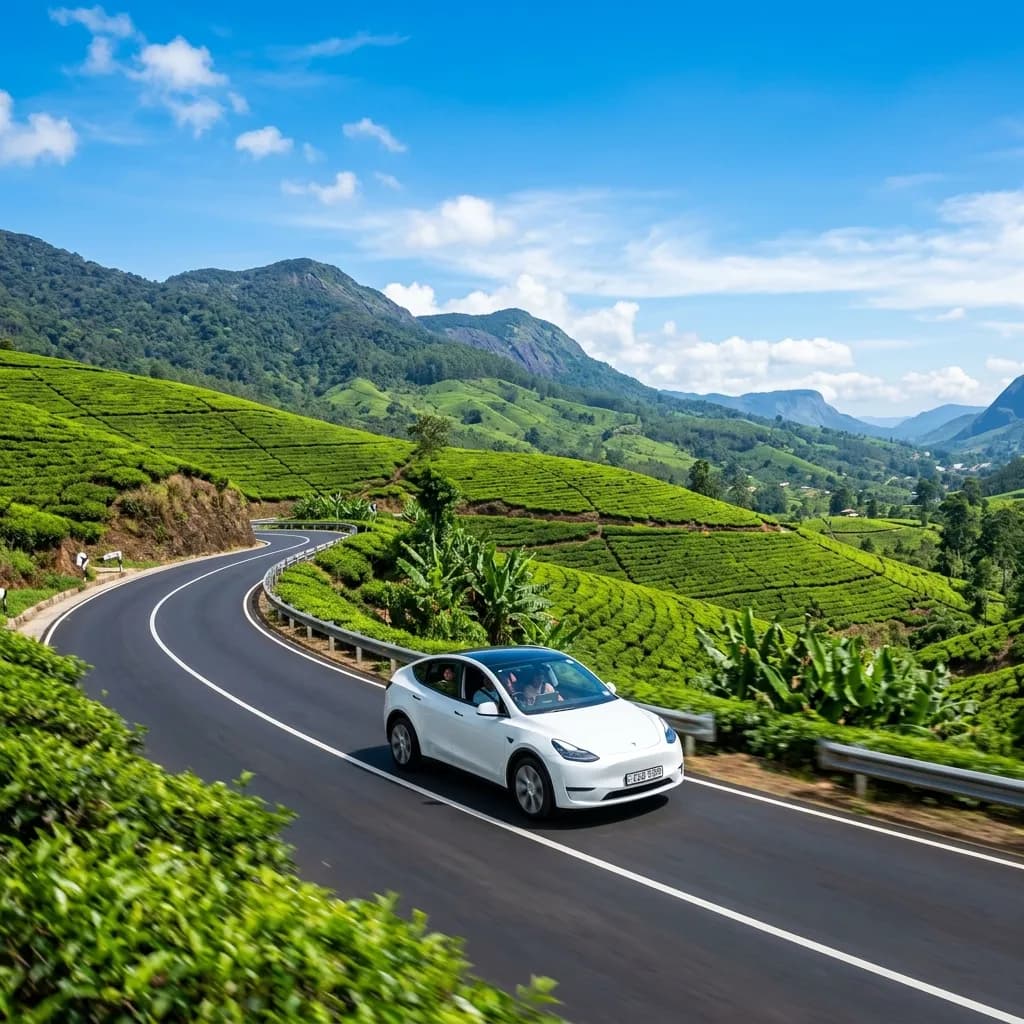
- Use dipped headlights in fog and rain; mist on roads such as Nuwara Eliya and Haputale is common.
- Leave extra distance behind lorries and buses on climbs.
- Check road conditions with your hotel or with us before long hill sections.
Wildlife and animals
Elephants cross roads near national parks and in the dry zone, particularly around Habarana, Sigiriya, Udawalawe and Yala. If you meet one, stop at a distance, switch off the engine and do not sound the horn or approach. Cattle, dogs, monkeys and peacocks use the roads everywhere. Private cars are not allowed inside Yala National Park, so you will need a registered safari jeep.
Emergencies
The national police emergency number is 119, and the ambulance service number is 1990. For a rental problem call our 24/7 line on +94 777425008. Tell us immediately about an accident, a breakdown or a mechanical warning light. In an accident, our terms require that you notify us and the police at once.
Health and personal safety
- Take out travel insurance that covers medical care and driving abroad.
- Drink bottled or filtered water, and use sun protection and insect repellent.
- Keep valuables out of sight when parked, and lock the car.
- Do not drive after drinking; the insurance does not apply to an intoxicated driver.
- Respect dress codes at temples and avoid photographs with your back to a Buddha statue.
Fuel, cash and connectivity
Fuel supply has varied in past years, so ask your hotel or us about availability before a long drive. Refuel when the tank is half full in the hills, the east and the north, where stations are further apart. Carry some cash for tolls and small purchases. Mobile coverage is good on the main roads and patchy in remote hills, so download offline maps.
Frequently asked questions
Is Sri Lanka safe for tourists who drive?
What number do I call in an emergency?
What should I do if I meet an elephant on the road?
Can I take my own car into Yala National Park?
Related pages
Book Your Vehicle with HBS Today
Genuine commercial insurance, 24/7 breakdown assistance and island-wide service from a government-registered agency.